Book EX2013ADM – Exchange Server 2013

Another Friday I wanted to bring you an interesting and very technical reading for us or our technicians, remember that as Henry Ford said that “There is only one thing more expensive than training people and having them leave: not to train them and let them stay”, So every once in a while a prize doesn't hurt, In addition to letting them play’ with LABs, for this book is about Exchange 2013!

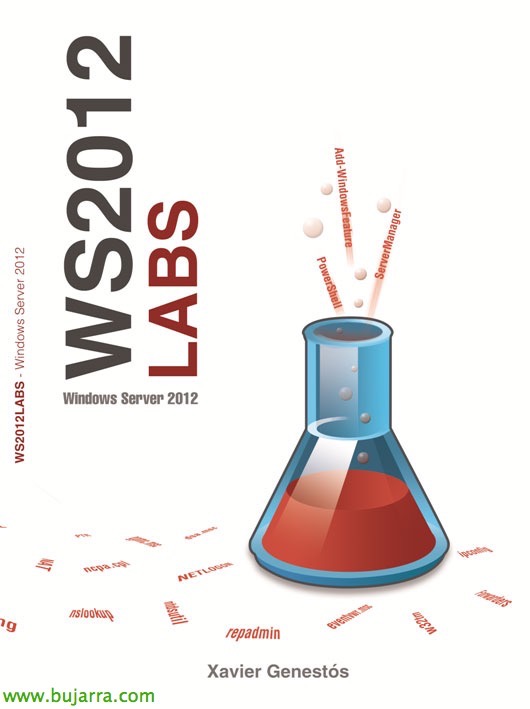
The book EX2013ADM – Exchange Server 2013 is the second in the collection of books by Xavier Genestós.
We will find Exchange in many companies and over time it has become one of the most widely used collaboration and messaging systems worldwide.
The book deals with all those practical topics we will need to know to correctly implement and administer an Exchange server.
Each section of the book is divided into concepts and procedures.
- The concepts are valid for any version of Exchange: from the version 2003 to the version 2013.
- The procedures are explained step by step for the version 2013, many of them are also valid for the version 2010. Además encontraremos como realizar los procedimientos con las dos herramientas que integra Exchange Server 2013: Exchange Control Panel y Exchange Management Shell.
Es decir, aunque no dispongamos de versiones anteriores a Exchange Server 2013, podremos aprovechar gran parte de los contenidos de este libro.
Algunos de los bloques que encontramos en el libro:
- Installation: Requirements, como instalar y verificar, etc.
- Exchange y AD: Integración con AD.
- Gestión de las BBDD de buzones: Como mantener y administrar las BBDD de Exchange (los ficheros EDB): logs de transacciones, retención de elementos y buzones, múltiples BBDD, defragmentación online y offline, indexación, Limits, etc.
- Gestión de las carpetas públicas.
- Reparación de la BBDD: Hard, soft recovery y nuevos procedimientos de recuperación introducidos en Exchange 2010/2013.
- Dimensioned: Lista y explicación de todos aquellos puntos a tener en cuenta para dimensionar correctamente nuestro servidor de Exchange.
- Gestión de PSTs: Estrategias de importación y exportación.
- Backup.
- Permissions: Permisos sobre elementos y buzones a otros usuarios, etc.
- Comunicación cliente-servidor: Modo online, modo caché, OAB, protocolos de comunicación (MAPI, ActiveSync, Outlook Anywhere, OWA), SSL.
- Outlook: control de crecimiento del OST, resolución de nombres.
- Message tracking: Control y funcionamiento de los logs.
- SMTP: Tipos de implementaciones para la entrada y salida de correo: definición y análisis de las implementaciones, Recommendations, instalación paso a paso. Se analizan tres escenarios.
More info: