Migrar Backup Exec 11d to Backup Exec 12

This document describes the process of upgrading Symantec Backup Exec 11d to the Symantec Backup Exec version 12. It's a pretty simple process, but we must take precautions, lest disaster strike.
The first thing we need to do, is to make a copy of the Backup Exec configuration, we can refer to this document for help (http://www.bujarra.com/?p=1444).
Once the data export is completed, we proceed to install Bexec 12,

We select the language for our installation, “OK”,
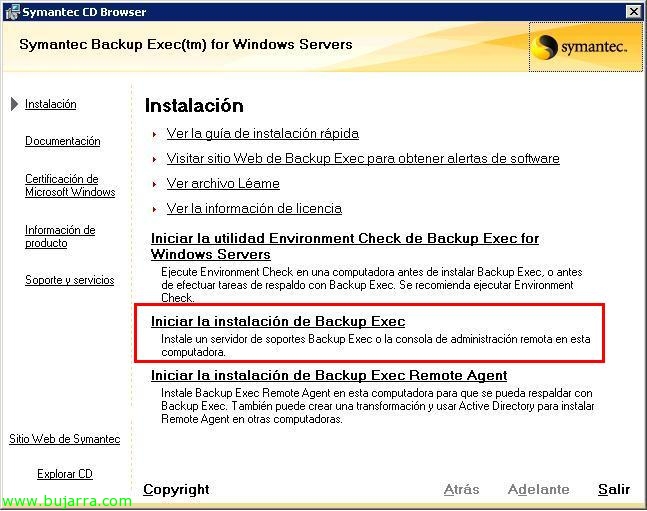
We have the Installation menu, from here we can read Backup Exec installation guides, run the check utility, or proceed with the installation. We will skip the check utility, since the installation wizard runs it before starting the installation. So we click on “Start the Backup Exec installation”

We need to make sure the wizard detects our already installed version, We check that it is correct, and informs us that the configuration will be migrated, “Following”,
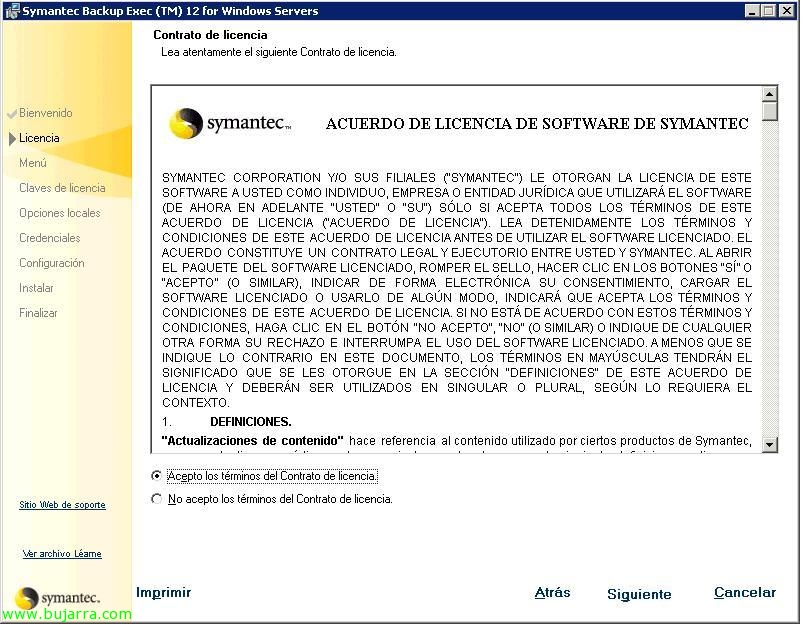
We accept the license agreement “I accept the terms of the License Agreement” & “Following”,

Mark “Local installation”, “Following”,
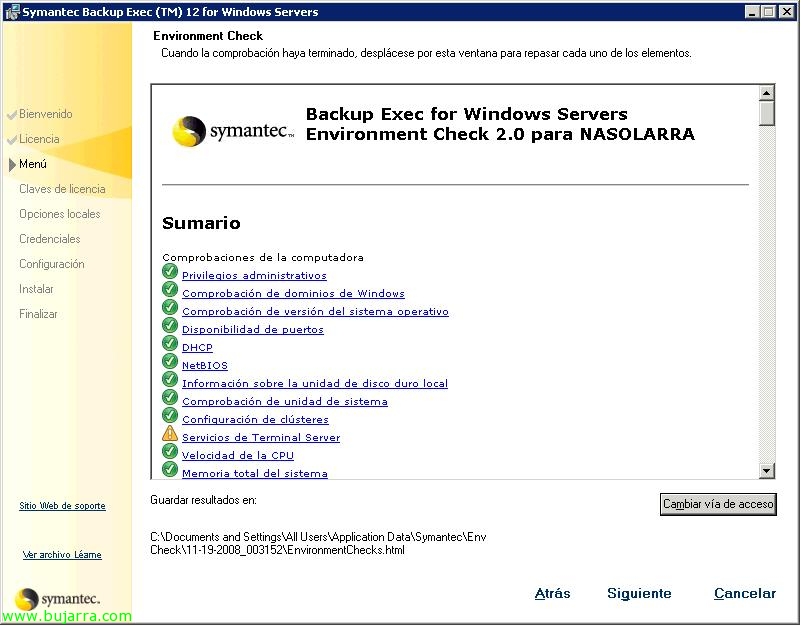
Aquí nos realizará el chequeo de comprobaciones, debemos cumplir todos los requisitos para poder continuar. “Following”,

Introducimos nuestros numeros de serie,
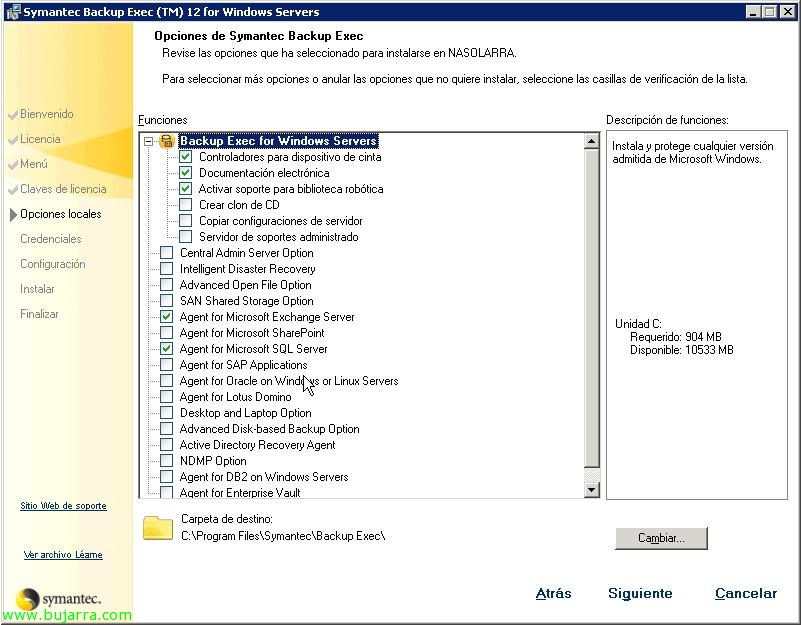
Debemos marcar las funciones que querramos que tenga nuestro servidor de Backup, Continue, “Following”,
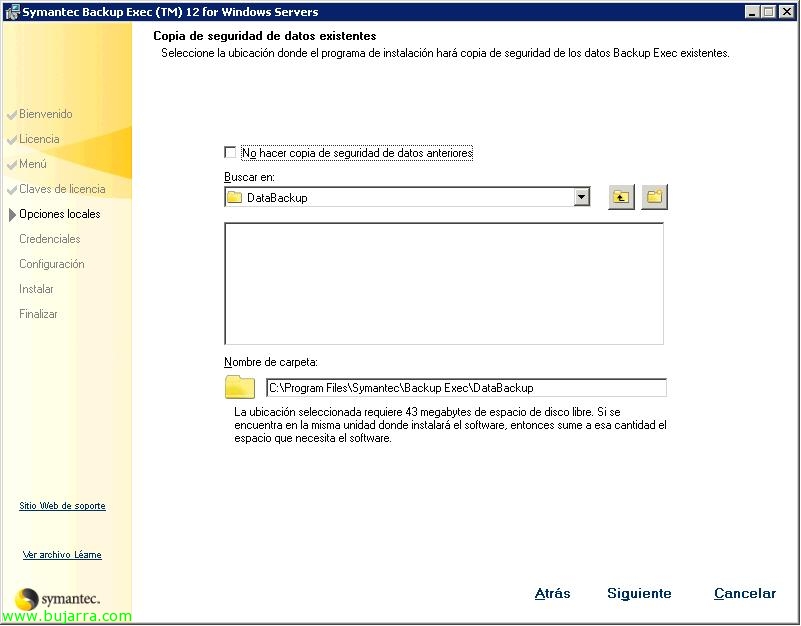
Esto es importante realizar, una copia de seguridad de nuestra base de datos SQL donde tenemos todos los datos de Backup Exec. No sea que durante el proceso de migración todo falle 😉
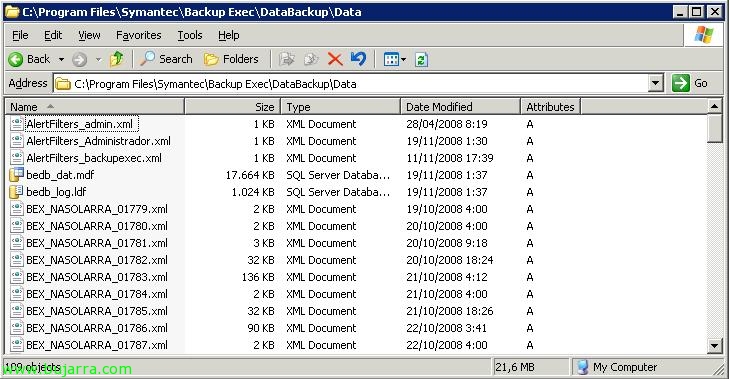
Esto es lo que nos generará, una copia de seguridad de la BD de SQL.

Introducimos los credenciales de un administrador de Backup Exec,

Dependiendo de nuestro hardware, We select the option that interests us the most,

Comprobamos el resumen y pulsamos en “Install” to get started with the installation,

… We wait while you install…

Podemos comprobar ciertos procesos de la migración…

…

…

GOOD! comprobamos que todo haya sido correcto, “Following”,

And that's it, ahora deberíamos ejecutar un LiveUpdate para actualizar los últimos parches tras el reinicio del servidor.