Configuring Citrix Merchandising Server and Client Distribution with Citrix Receiver

Today we see one of the latest Citrix novelties, your Merchandising Server product together with your Receiver client. The Citrix Merchandising Server product offers us a perfect distribution of any type of customer (or plug-in) to our network teams, apart from always keeping them updated as it continuously checks for new developments! We can create a series of rules to distribute the plugin that interests us to whoever and how we are interested. Of course,, to distribute the plugins, we will need Citrix Receiver in the installed stations, being able to make a remote and silent installation in any way (with Microsoft GPO's…), once you have Citrix Receiver, it will know if you should install a plugin or not, Fully transparent to the user! Of course, it is free for those who have a Citrix environment since it does not require a license, And if we give it some thought we can see that we can distribute other types of software […]

Free and interesting utilities for Citrix environments

In this document we see a series of quite interesting utilities, especially for Citrix environments, although there are some for Microsoft or VMware environments, They are all taken from the http website://ctxadmtools.musumeci.com.ar, We can download all of them in the pack called: CtxAdmTools. With them we will be able to list, export, Import and make bulk modifications in our Citrix communities, it is always quite interesting to be able to export something in case the DB gets corrupted, ¿No?

Additional Configurations on a Presentation Server or XenApp

This procedure explains a variety of topics, I put them all in the same document, but they would be the following topics: ICA Protocol Configurations – AKI Connect to a User Session – AKI Create additional Citrix administrators – AKI Server/Application Performance Improvement and Connectivity – AKI Isolation Environments for Applications (IEA – Aplication Isolation Enviroments) – AKI Print Themes: Printers and drivers – AKI Zones – AKI Ensure connectivity by enabling Citrix SSL handover and raising the level of encryption – HERE

Using Citrix User Profile Manager – Citrix UPM

Citrix User Profile Manager is a new Citrix product that we hope will help us take some of the headaches away. It is well known that in Citrix environments one of the biggest problems is the management of mobile profiles, With this new app we hope to make everything a little easier. So let's not wait any longer and download the application, which is free from the Citrix website in MyCitrix: HERE. It is a utility that integrates with Active Directory, since what it generates in itself is a template that we must import into a policy to later configure it and apply it to users.

Using Citrix Stress Printers

In this document we will see how to use Citrix Stress Printers to test a Citrix environment with multiple printers. We will use a Citrix tool called Stress Printers, with this utility we will be able to simulate the load that a server experiences when creating printers on user logon. We will be able to configure how many printers we want it to create for us (simulating a user logon), the time we want it to wait before deleting them (simulating a user logoff) and how many times we want it to repeat this process. This is a process that should be carried out on Citrix Presentation Server or Citrix XenApp.

Hide Local Drives on Citrix Servers

This procedure explains how to hide the local drives of a Citrix server so that users when working against published applications cannot store anything on the server's disks. It is simply a matter of editing a policy template that we will then apply through a policy to the users we are interested in not seeing the server units. This policy can NOT be applied only to the server, rather, it is a user policy, so it must be applied to a user OU. Typically, the Citrix server has letters assigned to it other than C and D, the normal thing would be M, N… and so on respectively, then, We will run into a problem when applying the policy because our disk drives do not come. This document explains how to customize this policy with our disk drives

Create a website in Web Interface and connect to it

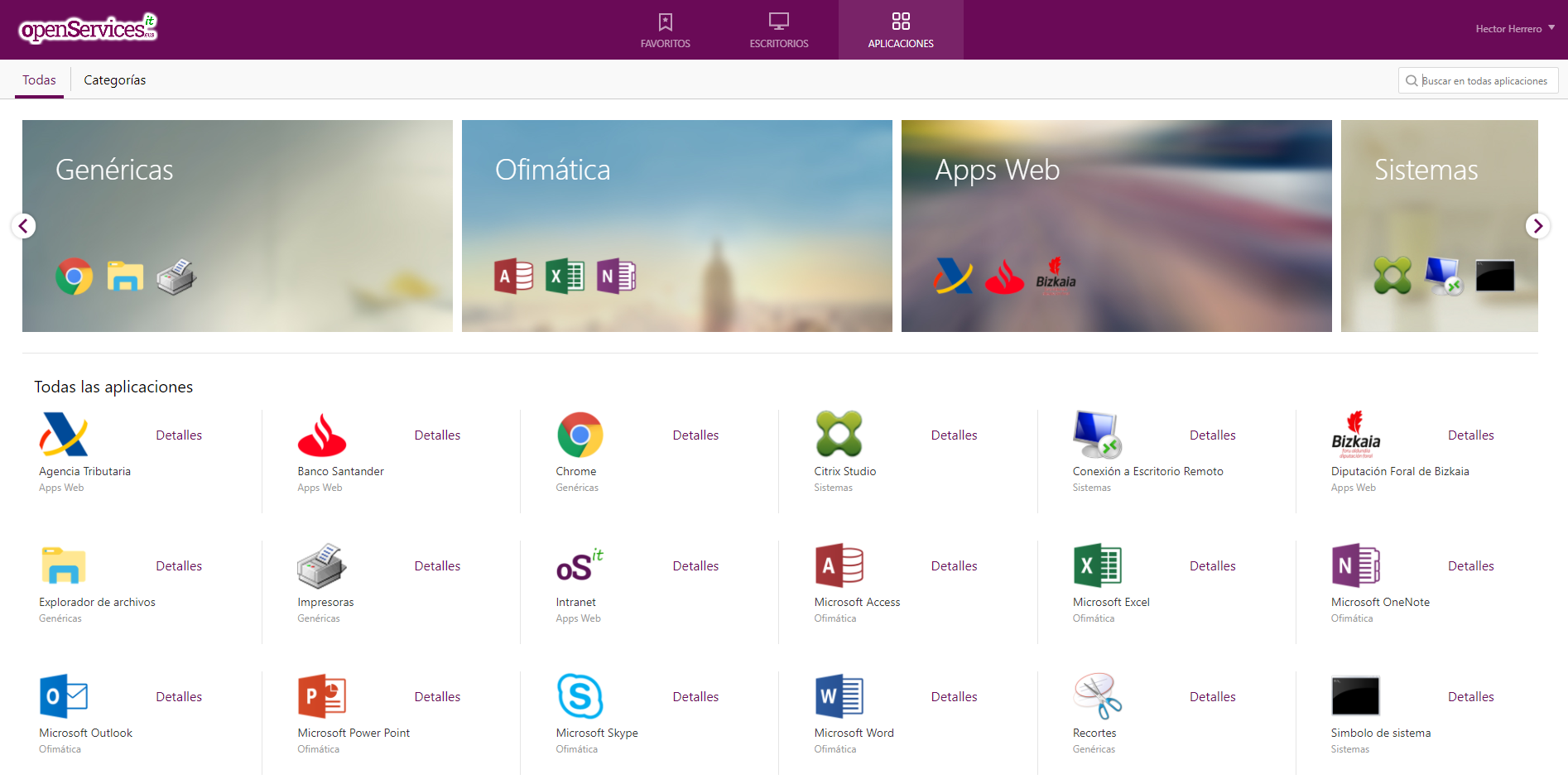
Una forma cómoda de que se nos conecten los usuarios, o por lo menos desde internet para no tener que hacer grandes configuraciones o explicaciones a ellos, es habilitar un sitio web para que se conecten a las aplicaciones. En este procedimiento se explica cómo habilitar este sitio y la forma de acceder como si fueramos un usuario final.

Configurations to be made on an additional server

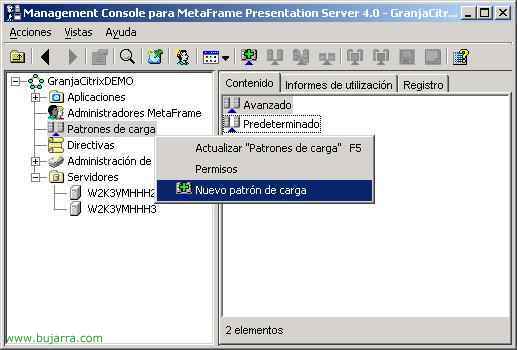
These configurations must always be done whenever we have more than one server in the community. It is simply about configuring a load balancing to manage the applications and performance on the servers, so that one server is not filled with users while another is available, we can create different load patterns to balance users. In my example, I will create a load balancing for a maximum of ten users per server. Then, when adding the second server to the community, I will have to configure the published applications to run on different servers, that is, If Word is published on one server 1, it will also need to be published on the other server 2 so that users can connect to either server interchangeably.. And in the end, we will configure a mobile profile for all users connecting to the Metaframe servers.. Imagine that they personalize a published application. (Word.) Yes […]