Installing VMware ESXi 5

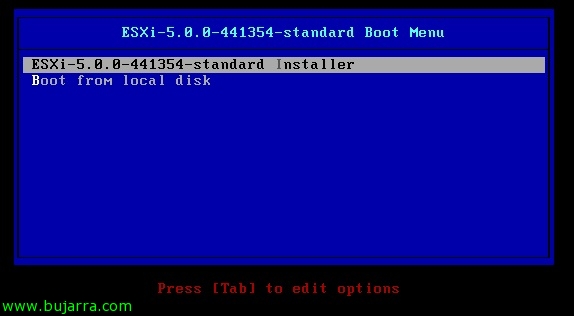
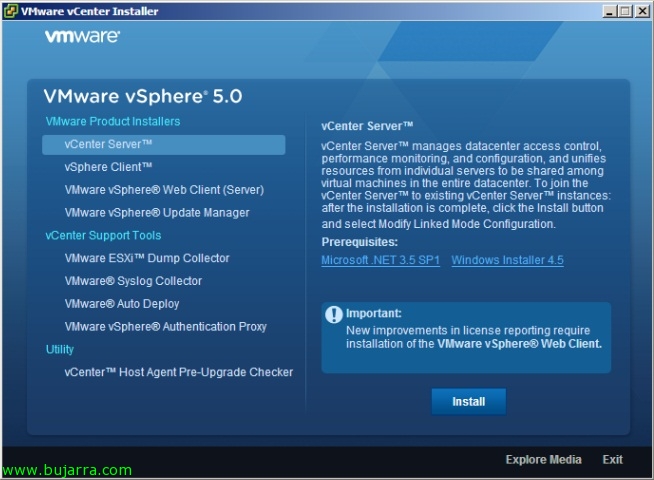
With the intention of making a series of articles that show us all the elements of the new version of vSphere 5 We will see different articles (more or less simple as this one is); where we will see the installation of the new VMware ESXi hypervisor 5, In this case we will carry out an interactive and manual installation, since we could deploy it massively over the network. Before doing so, we must prepare the installation medium CD/DVD or via a USB device.

What's New in vSphere 5 and licensing

This document is presented as a summary of the main new features of VMware vSphere 5 we will also try to explain the new and definitive licensing (now you also pay for RAM!). Until a few days ago, the licensing of vSphere 5 even affected the free version by limiting it to 8Gb of RAM, until a few days ago they rectified it by limiting it to 32Gb (as well as the rest of the products), since they even stop the entry of new customers O_o In addition, VMware is committed to giving us 7 years of support with the version 4.1, See…

VMware ESXi Network Installation 5 using PXELINUX and configuration files

En este documento veremos cómo desplegar o realizar instalaciones de red de VMware ESXi 5 usando PXELINUX y archivos de configuración mediante PXE, utilizaremos un servidor DHCP que será el encargado del direccionamiento, un servidor TFTP para transmitir las imágenes mediante PXE, ficheros de configuración de los hosts (optional) en el arranque de los hosts, con esto conseguiremos de una forma automatizada disponer de tantos hosts ESXi como necesitemos de forma instantánea,

Recovering a Deleted VMFS Partition

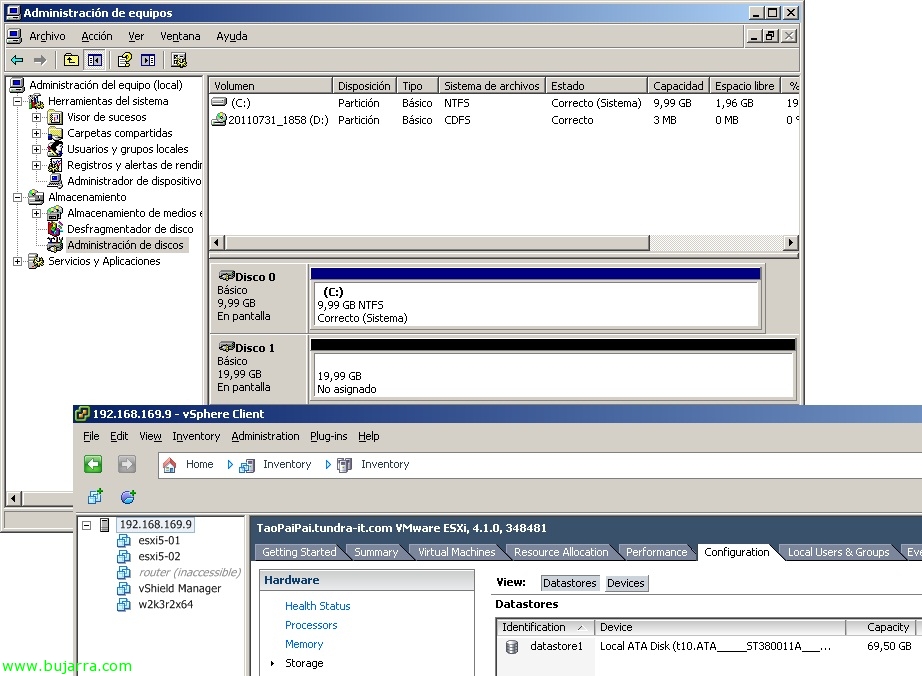
In this document we will see how to recover the contents of a deleted VMFS partition, In this document we will simulate that an 'administrator’ has deleted a VMFS volume from the disk manager in Windows because it had the LUN presented to the vCenter server where they perform backups using VCB, I had it presented in writing mode and not only with reading, so it can be a good example 🙂

Virtualizing Android on VMware

A veces tenemos la necesidad de testear ciertas apps bajo sistemas operativos diseñados exclusivamente para dispositivos móviles, in this document we will see how we can run Android (the S.O. 'Now’ from Google) under a VMware virtual machine. This document is valid for both virtualizing Android under VMware ESXi and VMware WorkStation,

VMware vCenter HeartBeat

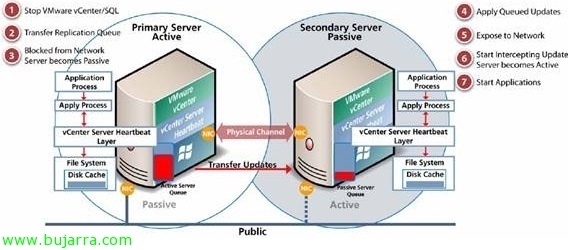
In this document, we'll look at installing and configuring VMware vCenter Heartbeat, this product allows us to obtain high availability of our VMware vCenter server in environments where it is critical, allowing application-level protection at all times, services, SQL Server if on-premises, Update Manager or if we have VMware View protecting it for use with VMware Composer. With this product we will have two vCenter servers, A primary one (active) and a secondary one (passive) where we can manually change roles (switchover) or in the event of a fall (failover) We will have high availability since the information is continuously replicated through a private network, This drop could be at the hardware level, S.O., Network Issues, vCenter application crashes or their dependencies.